Harper Baumann · 6 October 2026
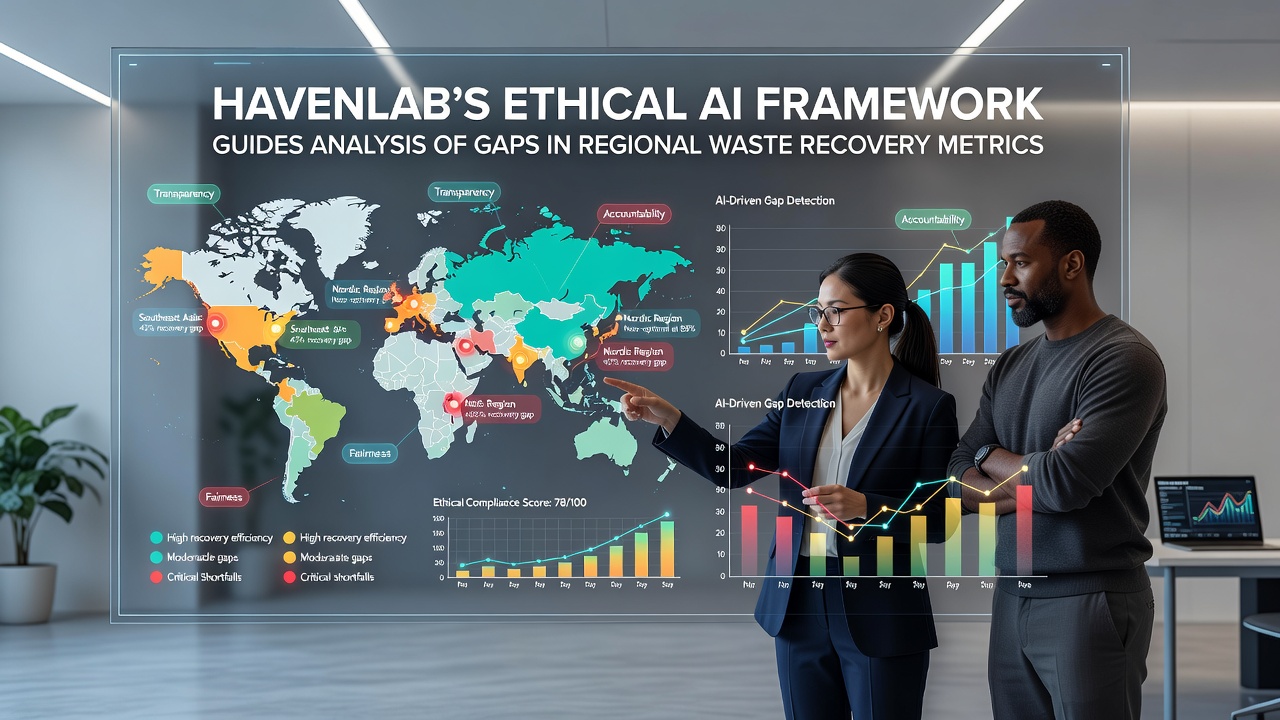
Havenlab's Ethical AI Framework Guides Analysis of Gaps in Regional Waste Recovery Metrics
Regional waste recovery metrics reveal significant inconsistencies across different areas, and Havenlab's ethical AI framework provides structured methods to examine those discrepancies without introducing bias into the evaluation process. Researchers at the laboratory developed the framework specifically to handle datasets from municipal recycling programs, industrial by-product streams, and composting operations while maintaining transparency at every processing stage.
Data collection practices differ widely between jurisdictions, which creates measurable gaps when analysts attempt to compare recovery rates. Some regions report detailed breakdowns of material types recovered each quarter, whereas others aggregate figures into broad categories that obscure variations in performance. Havenlab's approach applies algorithmic checks to flag incomplete entries and cross-references them against publicly available government statistics before any modeling occurs.
Current State of Waste Recovery Reporting
Figures released by the United States Environmental Protection Agency indicate that national municipal solid waste recovery reached approximately 32 percent in recent reporting periods, yet individual states display recovery rates ranging from under 15 percent to over 50 percent. Similar patterns appear in reports from the European Environment Agency, where member states show divergent outcomes tied to differences in collection infrastructure and measurement protocols. These variations complicate efforts to identify genuine progress versus artifacts of reporting methodology.
October 2026 updates from several regional authorities are expected to incorporate new sensor-based tracking systems, which may narrow some data gaps but will also introduce fresh compatibility challenges when datasets are merged for broader analysis. Havenlab's framework includes protocols for normalizing inputs from legacy manual logs and newer automated sensors so that comparisons remain consistent across time periods.
Application of the Ethical AI Framework
The framework operates through a sequence of validation layers that prioritize auditability. Initial processing identifies outliers in recovery percentages, then traces those anomalies back to source documentation such as landfill diversion logs or material flow studies. Subsequent layers test for demographic or geographic skews that could distort aggregate results, drawing on established practices from academic research institutions including those documented in reports by the Canadian Council of Ministers of the Environment.
Analysts apply the system to datasets covering multiple continents, allowing direct comparison between North American county-level figures and Australian state-level statistics published through government environmental portals. The process flags instances where recovery claims exceed plausible material generation volumes, prompting manual review rather than automatic correction. This step prevents overstatement while preserving the original data for secondary examination.
Identified Gaps in Regional Metrics
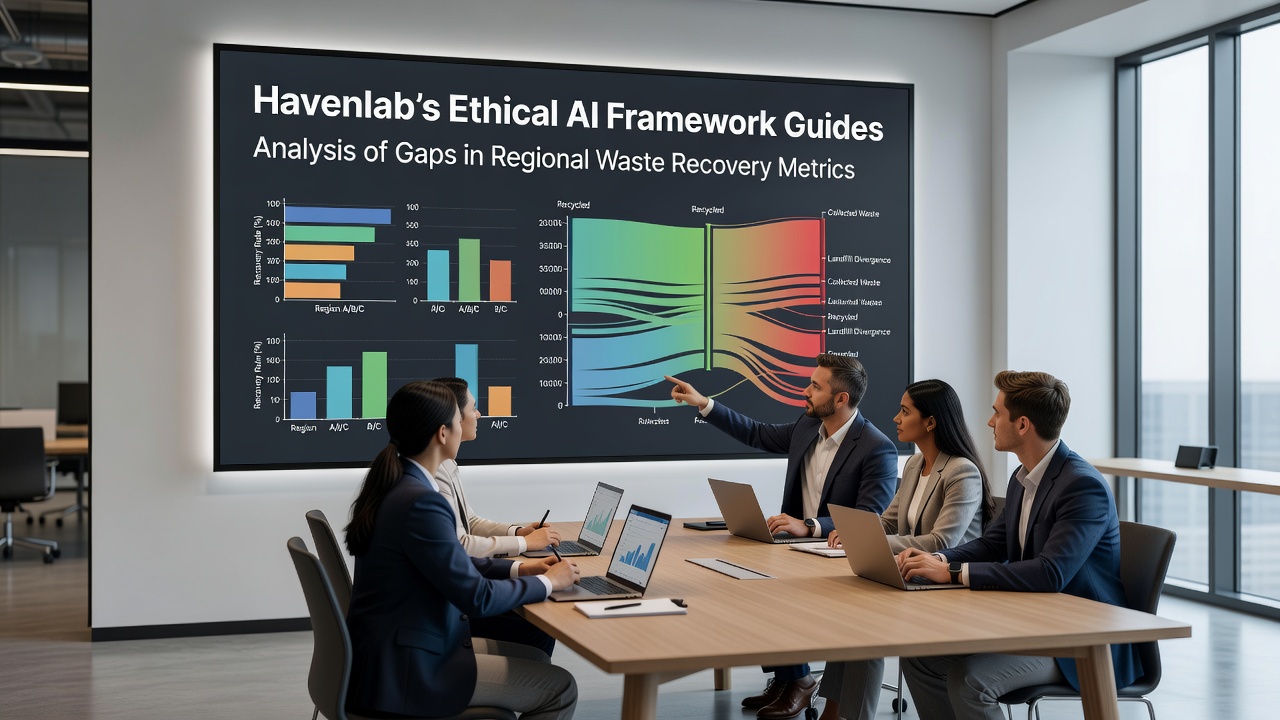
Analysis conducted through the framework highlights several recurring issues. First, temporal misalignment occurs when reporting cycles end on different calendar dates, making year-over-year comparisons imprecise without adjustment. Second, material categorization varies, with some areas separating construction and demolition waste from household streams while others combine them. Third, verification mechanisms differ, ranging from third-party audits to self-reported estimates that lack independent confirmation.
These gaps affect downstream uses of the data, including policy modeling and investment decisions in recycling infrastructure. When gaps remain unaddressed, aggregated national or international summaries can mask underperformance in specific localities or overstate progress in others. Havenlab's documentation outlines how the ethical framework systematically surfaces such issues without assigning value judgments to any participating region.
Integration With Broader Environmental Data Sources
Cross-referencing occurs with industry reports from organizations focused on circular economy principles, including publications from the Ellen MacArthur Foundation and peer-reviewed studies from universities in multiple countries. The framework ensures that any external dataset meets minimum standards for metadata completeness before inclusion, which reduces the risk of propagating errors from one source into the combined analysis.
Researchers note that recovery metrics for specific materials such as plastics and metals show larger gaps than those for paper and organics, largely because tracking systems for the former categories remain less standardized across regions. Adjustments applied within the ethical AI pipeline account for these differences by weighting confidence intervals according to source documentation quality rather than assuming uniform reliability.
Conclusion
Havenlab's ethical AI framework supplies a repeatable process for dissecting waste recovery metrics and exposing where inconsistencies arise from measurement practices rather than actual performance differences. Continued application of the method to expanding datasets, including those scheduled for release in October 2026, will support clearer identification of regions requiring improved data infrastructure. The resulting insights remain grounded in verifiable source material and transparent processing steps that allow independent verification by other analysts.